How to read drum notes?
Drum sheet music is a standardized way of notating drum beats, rhythms, and fills using traditional musical notation. Learning to read drum notation opens up a world of musical possibilities and helps you play along with your favorite songs accurately.
Understanding Drum Notation Basics
Drum notation uses a five-line staff (also called a stave) where each line and space represents different drum kit pieces. Unlike other instruments, drums use specific symbols and positions to indicate which drum or cymbal to hit.
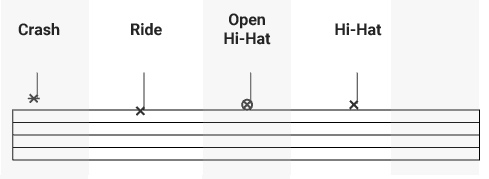
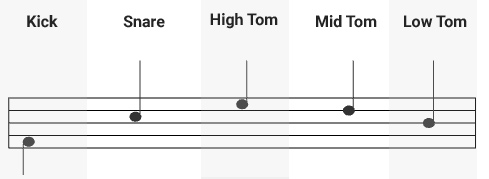
Cymbal Notation
- X with circle around: Crash cymbal
- Regular X: Closed hi-hat
- O symbol: Open hi-hat
Standard Note Heads
- Filled circle (●): Snare, toms, bass drum
- X symbol (×): Hi-hat, ride cymbal
Two Ways to Learn on Play Drums Online
Rhythm Game Mode
Perfect for beginners! The rhythm game uses colored lanes that represent different drum pieces. Notes scroll down each lane, making it easy to see when and what to hit.
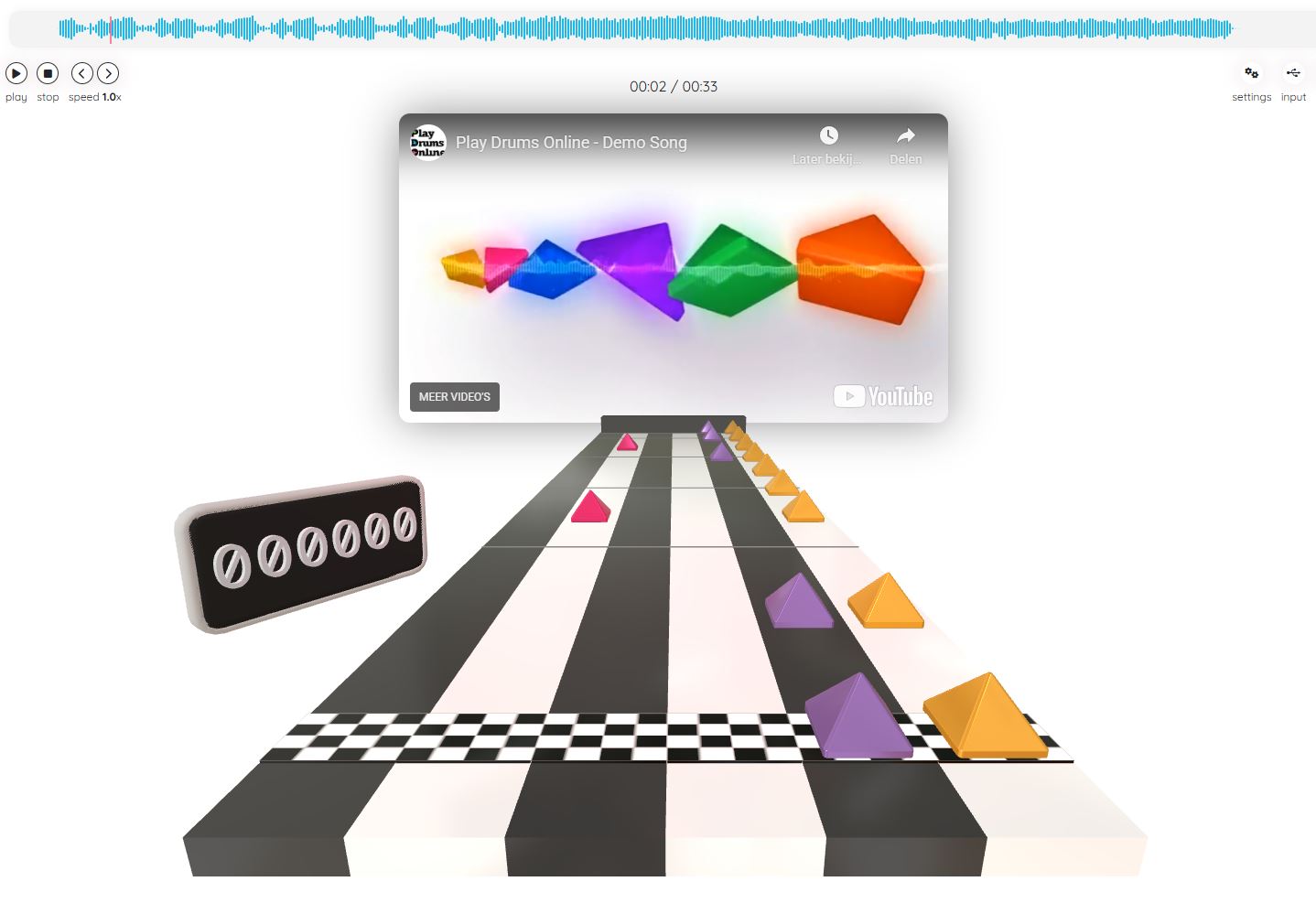
The rhythm game interface with color-coded lanes for each drum piece
Lane Colors (left to right):
- Yellow lane (left): Crash
- Red lane: Snare drum
- Brown lane: Floor tom
- Green lane: Mid Tom
- Blue lane: High tom
- Purple lane: Bass drum
- Yellow lane: Hi-hat
- Orange lane: Ride
Traditional Drum Sheets
For those ready to learn standard musical notation! This mode displays authentic drum sheet music that you'll find in music books and professional settings.
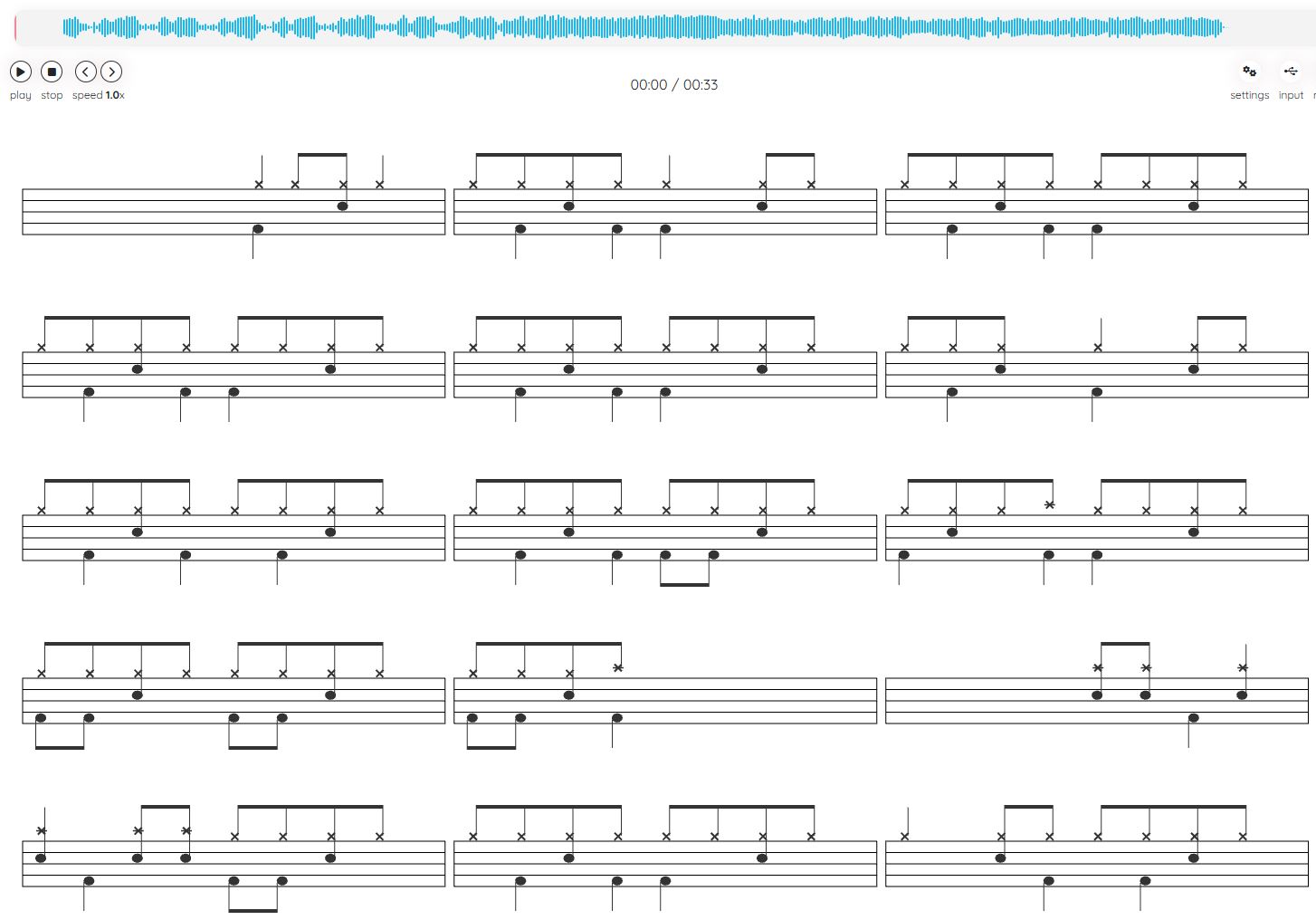
Traditional drum sheet music using standard notation
Benefits:
- Learn industry-standard notation
- Develop sight-reading skills
- Play with other musicians
- Access any drum sheet music
- Understand complex rhythms
Essential Tips for Reading Drum Notation
Ready to Start Learning?
Reading drum sheet music takes time and practice, but with patience and persistence, you'll be able to play along with your favorite songs and create your own drum beats. Start with our interactive tools and progress at your own pace!